Potty training can feel like an unreachable milestone at times, for both you and your baby. While formal potty training usually happens closer to toddlerhood, there are plenty of simple, stress-free ways you can help your baby get ready long before diapers are gone for good. The goal at this stage isn’t perfection, it’s familiarity, comfort, and confidence.
If you have an 18-month-old toddler, or a 2-year-old toddler and are discouraged that they are still not potty trained, you are not alone. We have two year old twins and unfortunately, (not from a lack of trying) they are not potty trained. People always say “you must have your hands full” or “you must be busy” when they see we have twins. I internally roll my eyes knowing they have nothing better to say. What I really wish they would say is - that’s a lot of diapers! I would undoubtedly say the hardest part of the baby/toddler stage for me is poop. Give me crying, runny noses, waking through the night, spit ups, but once babies start eating solids…those poops are the absolute worst. Don’t get me started on diaper changes. Sometimes it’s the alligator roll, sometimes is the screaming and kicking, or uncontrollable tears for diaper changes that shoot my cortisol levels up 100%!
It can be extremely discouraging seeing moms on social media proudly proclaim that their child under the age of 2 years is potty trained. It might even feel like a failure in parenting if you have toddlers that aren’t potty trained by a certain age. Give yourself permission to stop comparing your situation to other parents. Some kids learn sooner than later to be potty trained. Our pediatrician told us toddlers are ready to be potty trained closer to the age of 3. Of course there are babies out there that learn at a younger age (my mom said I was 18 months old when I was potty trained).
Must Haves for the Potty-Training In Between Stage
Take it from a mom of toddler twins that has double the diapers everyday, you’ll thank me later!
- Shark StainStriker vacuum: I’m going to be honest here, sometimes toddler…what we’ll call “messes” 💩 will get onto the carpet or the couch.
- Pet Stain & Odor Remover: Because there isn’t a “Toddler Stain & Odor Remover” spray on the market. Again, messes like poop and pee can get onto the carpet or the couch, so I use this spray before I bust out the Shark StainStriker vacuum.
- Oxi Stain Remover Spray and Oxi Powder: The spray is great for lighter stains out of clothes, and the powder is great for getting heavier stains out of clothes. I have (and still do) use Oxi powder for my babies’ diaper blowouts.
- Laundry brush: A laundry brush is a must have to break up stains by scrubbing the garment with Oxi stain remover spray.
- Poop bags and dispenser: Again, another pet product but so useful for toddlers. I am not a fan of the diaper genie personally, so we just use a small trashcan dedicated for diapers. The trash can can stink immediately after a dirty diaper is tossed. We use pet poop bags to tie up the diaper before throwing it away, which helps keep our home smelling clean and not like a port-a-potty. The dispenser also makes getting new bags easily, and it can hook onto our diaper bag.
- Lysol sanitizer spray: Poop stinks. I am amazed at how the room can smell after a diaper change. This helps kill bacteria and sanitize the air so it smells clean and fresh.
- Diaper changing mats: We still use changing mats for diaper changes. This is great as it helps keep our floors clean!
- Diaper caddy: I love having a diaper caddy with the twins Mickey and Minnie Pull Ups, the baby’s diapers, wipes, baby powder, etc. all in one place. The sooner the diaper change is over the better because I cannot stand poop! Having a diaper caddy helps speed up the diaper changing process because I have all my diaper needs all in one place.
- Purell: Hand sanitizer is great to have on hand after diaper changes. Sometimes I am not near a restroom to wash my hands (if I am out in public) and having hand sanitizer helps to kill any germs after a diaper change.
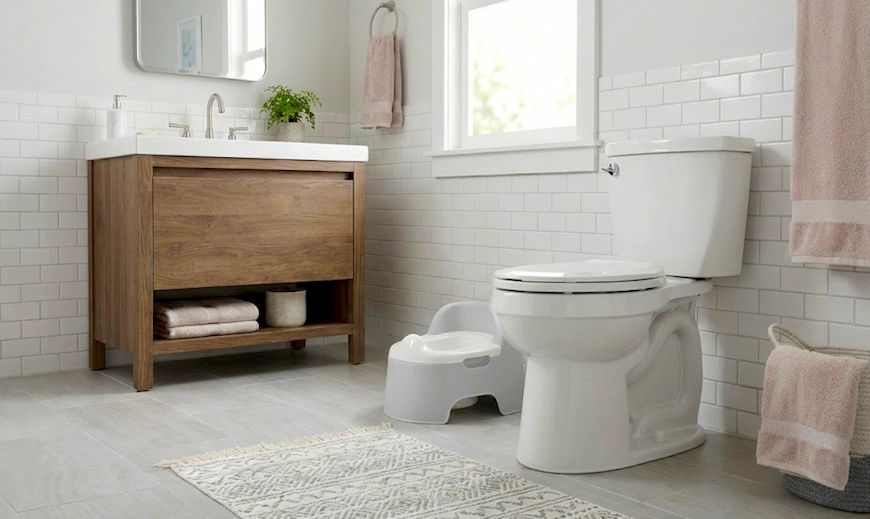
- Potty seat: We bought a potty seat a few months ago for our twins just to start introducing the concept of sitting on the potty to them. They have sat on it several times, but no pee or poop trips yet. I know it will not be too far away though!
.png)
How to Help Your Baby Get Ready for Potty Training
Start by noticing the signs
Every child develops at their own pace, but babies often show early readiness signs before they’re truly ready to potty train. These can include staying dry for longer periods, showing awareness of dirty diapers, becoming curious when you use the bathroom, or communicating discomfort when they’re wet. Paying attention to these cues helps you know when to gently introduce potty concepts.
Talk about the potty early and often
Even if your baby can’t fully understand yet, talking about using the potty builds familiarity. Narrate what you’re doing when you go to the bathroom or during diaper changes. I use phrases like, “Mama has to go potty,” or “Mama has a big poop” (don’t laugh, we all do it!). This helps connect words with actions over time. This kind of language exposure lays an important foundation.
Introduce potty-related items without pressure
Placing a small potty chair in the bathroom can make it feel like a normal part of the space. Let your baby sit on it fully clothed or explore it like any other new item. You can also read potty-themed books or let them watch you flush and wash hands. Keeping things relaxed and playful helps prevent fear or resistance later.
Create healthy bathroom routines
Babies thrive on routine, and bathroom habits are no different. Washing hands together, talking through diaper changes, or having consistent bathroom times helps normalize the process. These routines naturally transition into potty habits when the time comes.
Encourage body awareness
Helping your baby recognize their body’s signals is a big part of potty readiness. Use simple words like “pee,” “poop,” and “clean” during changes. Over time, your baby will start making the connection between how their body feels and what’s happening. Our toddlers will tell us they pooped, and hey, that’s a start. At least they recognize what poop is and they are ready to have a clean diaper put on. Soon they will start to know their body needs to go pee or poop before it starts to happen.
Offer encouragement, not expectations
At this stage, there’s no need for shame, pressure, or timelines. Encourage curiosity and participation instead. A smile, clapping, or big praise helps your baby associate potty-related activities with positive emotions. Sometimes our 2yr old toddlers show concern when they have a “big pee” or a “big poop”. Instead of reacting in a negative way like “I just changed your diaper!” “gross, this is so nasty!” or “you wet your clothes!” (even though I am thinking this), I say things like, “that’s okay! We can get a clean diaper!” “you had a big pee? Ok! Let’s get all clean!” “Did you go poop? Let’s check”.
Do not rush or force potty-training
Potty readiness isn’t about rushing, it’s about preparing. By introducing these small habits early, you’re helping your baby feel confident and secure when potty training officially begins. Trust your instincts, follow your child’s lead, and remember that every step forward no matter how small, is progress!
I hope this post helped you along your journey to glorious potty trained toddlers. It is a big milestone, so don’t get discouraged if it doesn’t happen right away. Try potty-training, and if it doesn’t work, try again in a few more months.
Take care, mama!
It would mean so much to me if you would like and subscribe on YouTube and follow me on Pinterest!
Pin this for later
Save this post to your Pinterest board so it's there when you need it.
Save to Pinterest
Roshel Madden
Wife, mom, and the voice behind Merry Madden, sharing faith, family, home, and all the little joys in between.