
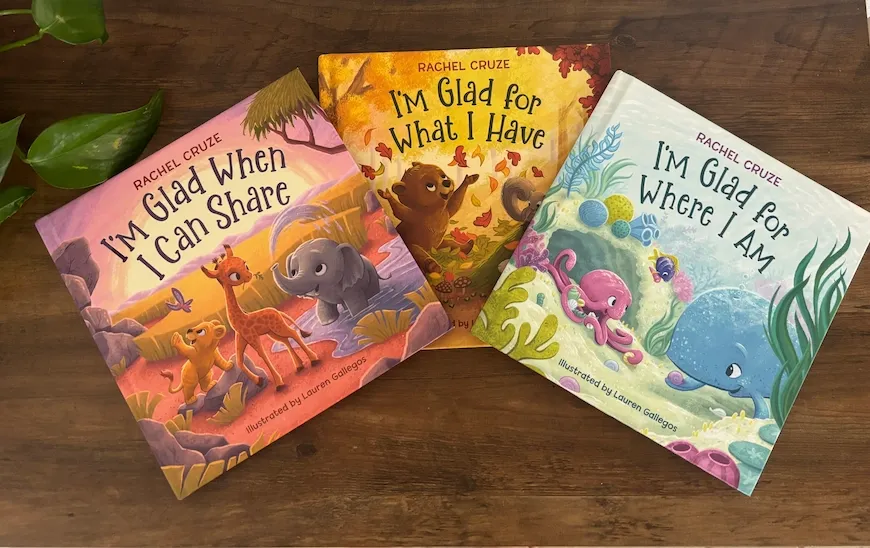
Over the last year and a half, I have enjoyed listening and learning about financial freedom from Ramsey Solutions. If you are not familiar with Ramsey Solutions, it is an organization founded by Dave Ramsey that teaches people how to build wealth and live debt-free lives. One thing I admire about Dave Ramsey is that he teaches financial freedom from a faith background. If you listen to him long enough, you’ll hear him quote Proverbs 22:7 “... the borrower is slave to the lender.” I appreciate that many (if not all) of Ramsey personalities are believers as well. Rachel Cruze, author, speaker, (Dave Ramsey’s daughter) wrote three children's books about gratitude, contentment and sharing.
As a mama to little ones, I want to raise our children in the Lord. I want our family to live a Christ-centered life where everything we do, we do it to the glory of God (1 Corinthians 10:31). I want to teach our children about finances, including generosity and gratitude from a faith mindset. We have boy-girl toddlers and we are currently in the season of them having a hard time sharing. In today’s blog post, I want to share (no pun intended) three books that our family loves and reads every week that will help you set the stage for gratitude, contentment and sharing with your little ones.
.png)
Teaching Gratitude
Book: I'm Glad for What I Have
This book helps children recognize the value of what they already have instead of focusing on what they don’t have. This book also teaches how having too much can become a problem.
Biblical application: In Luke 12:15 it says, “Then he said to them, “Watch out! Be on your guard against all kinds of greed; life does not consist in an abundance of possessions.”
How to apply it:
- Ask your child: “What are you thankful for today?”
- Practice gratitude throughout the day “thank you God for [blank]”
- Show your children the act of decluttering your home, or donating to Goodwill
- Point out simple blessings like a happy home, food, family, etc.
These simple and intentional applications build good habits of noticing God’s goodness in everyday life.
Be Thankful Where God Has You
Book: I'm Glad for Where I Am
This story teaches kids to appreciate their environment, their home, and their current season, which is something even as adults we struggle with!
Biblical application: Pauls talks to the church members in Philippi and says to them, “Not that I was ever in need, for I have learned how to be content with whatever I have.” Philippians 4:11
How to apply it:
- Talk about how God chose your family and home for a reason
- Encourage contentment instead of comparison (“their house vs. ours”)
- Celebrate simple, ordinary moments together
- Be creative with “no spend” activities
When children learn to be content where they are, they become less focused on what others have.
Teaching Sharing and Generosity
Book: I'm Glad When I Can Share
This book introduces the joy of giving and shows children that sharing isn’t losing, it’s gaining something better.
Biblical application: In Hebrews 13:16 it says, “Do not neglect to do good and to share what you have, for such sacrifices are pleasing to God.”
The story emphasizes that generosity is a gift from God and a way to love others.
How to apply it:
- Encourage your child to share toys or snacks
- Involve them in giving—donations, meals, or helping others
- Talk about how giving makes others feel
Generosity is one of the clearest outward signs of a content heart.
Bringing Biblical Values into Lessons on Gratitude
Contentment is not only biblical, but also pleases God. Scripture reminds us:
“Godliness with contentment is great gain.” 1 Timothy 6:6
Use these books as a springboard to connect everyday lessons back to God:
- Thank God together for what you have
- Talk about trusting Him for what you don’t have
- Remind your children that their worth isn’t found in things
Practical Ways to Reinforce Contentment Daily
Teaching contentment isn’t a one-time lesson, it’s a lifestyle.
Tips to raise content kids:
- Gratitude routines (morning or bedtime)
- Limiting comparison triggers (like constant shopping or social media exposure)
- Modeling contentment yourself (kids notice everything)
- Intentional giving moments as a family
Children learn far more from what we live than what we say.
Final Thoughts
Contentment is a quiet strength in a loud world. By intentionally teaching it through conversations, habits, and meaningful books like those by Rachel Cruze, you’re equipping your children with something far more valuable than material success.
You’re teaching them to live with joy, gratitude, and trust in God.
Pin this for later
Save this post to your Pinterest board so it's there when you need it.
Save to Pinterest
Roshel Madden
Wife, mom, and the voice behind Merry Madden, sharing faith, family, home, and all the little joys in between.