





Breastfeeding is such a beautiful journey. In the beginning, it isn’t always easy—it takes time, patience, and practice—but the benefits are truly worth the effort. I committed to breastfeeding my babies for a year, and I wanted to share my experience, the challenges I faced, and what helped me along the way.
Breastfeeding is an incredible source of nourishment for your baby. And you know what? Only you can breastfeed your baby. Isn’t that amazing? I truly believe God created this special design for us as mothers. There is something so sacred about the bonding experience—providing nutrients, antibodies, and comfort while holding your baby close. It’s a beautiful reminder of how thoughtfully we were made.
According to the American Academy of Pediatrics, breastfeeding offers many benefits for both baby and mother, making it a wonderful option for those who are able and choose to do it.
What Are Some Challenges to Breastfeeding?
I dealt with Postpartum Depression for six months, and I also had Dysphoric milk ejection reflex (D-MER). When the babies would start to breastfeed, during the first several seconds, I had this overwhelming feeling of sadness - for no reason, I couldn’t even pinpoint why I felt sad. I spoke with a maternal therapist and she told me about D-MER. I also was self conscious of my new body, so I didn’t like seeing my postpartum tummy with stretchmarks, or seeing my bare-breasts. It took me realizing that I need to give myself grace, and that one day I wouldn’t feel this way anymore. It is incredible what hormones can do, but also they can be the cause for some bad feelings. Eventually, I stopped feeling sad and the fog started to lift. I am happy with my body, stretchmarks and all!
Another challenge is when our babies started to develop teeth - there have been a handful of times where they would bite - ouch! But a stern “no!” nipped that in the bud, and they didn’t make a habit of biting when nursing. Also, one of our babies sometimes will hold on while feeding and their tiny nails can leave scratch marks which is uncomfortable, but a repositioning of their hands is the trick.
Feeding Multiple Babies or Feeding on a Schedule
For moms feeding more than one baby, nursing back-to-back or at the same time can be practical and efficient. For others, feeding on demand or sticking to a loose schedule works best. Every family and every baby is different, and there truly is no one-size-fits-all approach.
In the newborn days, I would try to tandem feed any chance I could. However, at night time around month three, I was so desperate for sleep, that if one baby woke to be fed, I would let the other baby sleep just so I could go back to sleep for a bit. This was a little counterintuitive because if one baby woke at 1:20 am and I nursed the baby for 20 minutes, I could go back to sleep at 1:40 am, but then the other baby could wake up to feed at 2:15 am, so the 35 minutes of rest probably wasn’t as good as just keeping both babies on schedule. Looking back, I learned that flexibility and grace matter far more than perfection.
If one baby is sleeping while another is nursing, tools like a Haakaa can be helpful to catch letdown milk and build a freezer stash. Every little bit truly helps.
Is it Difficult to Tandem Feed?
It wasn’t difficult to tandem feed, however in the early days where they are so small, I definitely would need a second hand to help get both babies in place. Eventually, I didn’t need to use the nursing pillow anymore because the babies were growing bigger, and took up more space on the pillow. Once they were crawling, they crawled right up to me which made it super easy haha!
How to Increase Milk Supply
The human body is amazing and it does an incredible job of prioritizing breastmilk production. Here are a few tips on increasing your supply:
1. Drink Lots of Water
I struggle to drink enough water as it is, and since breastmilk is mostly water, extra water intake is key. But do understand drinking more water doesn’t increase supply, it just keeps you well hydrated. Adequate water while breastfeeding helps prevent brain fog, prevent dehydration, fatigue and positively impacts breastmilk. Professionals recommend drinking 6 cups (128 ounces) of water per day while breastfeeding. This may sound like a lot…and it is! Haha so it will take some getting used to if you aren’t the best at drinking water. What I did to help is I have a gallon water jug to help keep track of my water intake, as well as having a tangible reminder to drink more water.
2. Be Mindful of Formula
Okay so nothing against formula! Our first few visits to the Pediatrician, the babies weren’t gaining weight according to the standard baby progression charts. I had to supplement with formula when the babies were newborn to help them get to their proper weight. Also, in the hospital formula was great since it gave me a chance to sleep and my husband could feed our babies. I was excited once I didn’t have to use formula anymore around month two. I did really like using Bubs Organic Baby Formula because it had ZERO corn syrup in it, is organic, and has good ingredients. However, I didn’t realize that formula can be counterintuitive because whenever you are using formula, obviously you aren’t breastfeeding and when you aren’t breastfeeding, your body isn’t cued to make more milk. The basic law of supply and demand. The more demand for breastmilk, the more supply. Feeding your baby is very emotional in the beginning - I remember feeling discouraged (major understatement) when I felt I wasn’t producing enough milk when the babies were newborn. I certainly didn’t want our sweet babies to go hungry. If I could do it all over again, I would reassure myself that the babies would NOT lack in nutrition and to continue to frequently nurse and pump until my milk levels were established, and perhaps quit formula sooner. But as they say, hindsight is 20/20 and I just wanted to get the babies’ weights up.
3. Eat Nourishing Foods (Galactagogues)
‘
Galactagogues are foods and herbs that can increase breast milk production. You are eating for two when breastfeeding! In my case, I was eating for three! Haha. After my Postpartum Depression went away, around month six, my appetite came back with a vengeance! I actually lost most of my baby weight in the first three months postpartum. I didn’t have a desire to eat much, just light snacks. I was mostly tired, so sleep was the priority. Also trying to cook a full meal for myself with two newborns was not an easy feat. I did make sure to drink water and eat foods that would increase my supply. When I came home from the hospital, my sweet sister-in-law Candace hooked me up with delicious breastmilk boosting snacks. I had a little station next to my comfy rocking lounge chair and could eat in the middle of the night during breastfeeds. Those first few weeks were the best! But the snacks are pricey and do add up, so I decided to make my own whenever possible. My all-time favorite lactation-friendly treat has to be my Chocolate Chip Lactation Cookies. These cookies are absolutely delicious, and are easy to make. They are essentially a chocolate chip cookie, but with Brewer’s Yeast and Flaxseed Meal, two ingredients you may not have on hand.
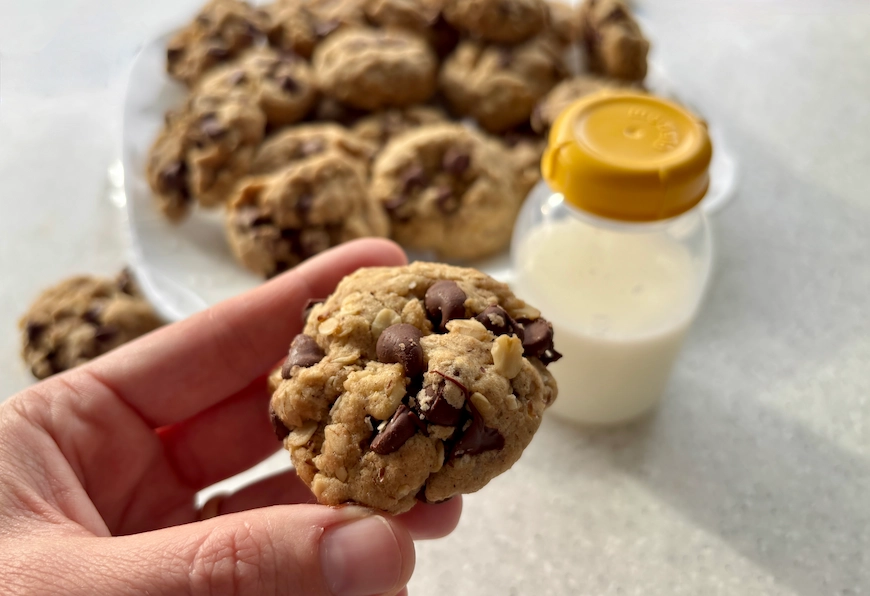
Here are some of my favorite breastfeeding snacks:
Breastfeeding is a lot of work, and it takes some patience but it WILL get better. You and your baby will soon be in sync and it will become easy. This is God’s natural design - it becomes second nature! However long you commit to breastfeeding, I hope you feel immense pride in yourself for doing so!
Check out my other blog posts on breastfeeding:



.webp)